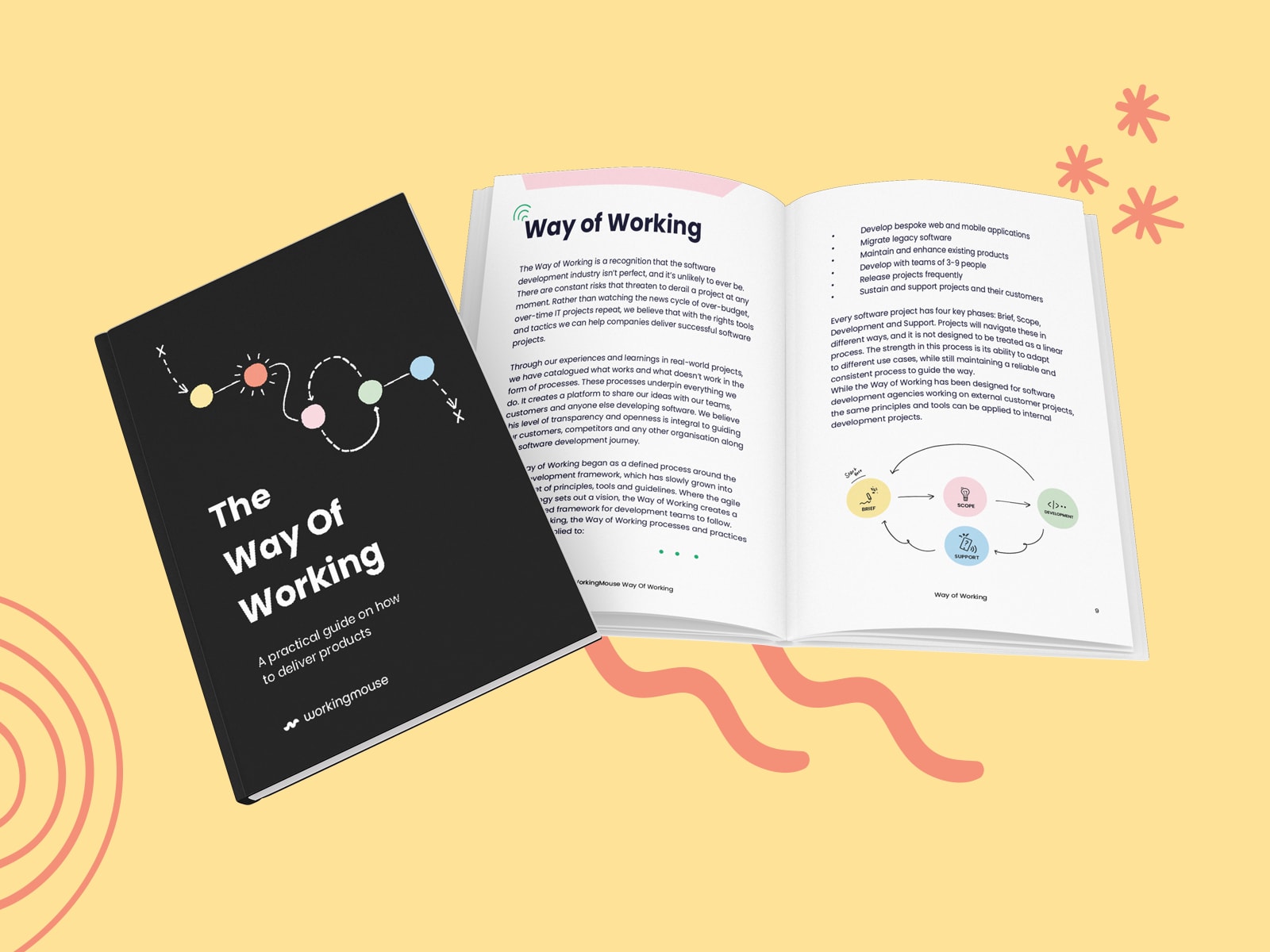
Each stage includes a range of activities and ceremonies to ensure the project is kept on track and delivering against the success criteria.
Even though WorkingMouse is the biggest advocate of the Way of Working, it has been created so that any company can adopt the process. It
has been and continues to be, used by organisations outside of WorkingMouse, with each implementation acquiring its own unique flavour.
What’s New in Version 7?
Version 6.3 of the Way of Working was published in mid-2019 when the world was a much simpler place. Since then, remote working has become a
priority for many businesses and WorkingMouse is no exception.
As a business, we’ve made significant strides forward, delivering projects on the most recent, innovative technology stacks in the market.
We’ve also focused entirely on service delivery, with a greater level of separation from our sister-brand Codebots.
Our commitment to excellence aligns with our new Codebots definition as a platform engineering tool that modernises enterprise software
delivery for digital transformation and legacy systems. This allows us to stay at the forefront of technology advancements, empowering us to
create cutting-edge solutions for our clients. This refined focus on service excellence ensures that we continue to meet and exceed the
evolving needs of our clients while adhering to industry standards and maintaining complete product ownership, in alignment with the
Codebots vision.
This has led to several changes in the Way of Working. While I won’t address them all (that’s something you’ll find out when you read the
book), I will bring up a few of the highlights.
Problem-led approach to the Brief stage
Why did it change?
We found that projects were being led into a solution-based mindset too early in the software lifecycle. It didn’t allow our product
designers to do what they do best; solve problems creatively. By shifting the focus to a problem statement at the Brief stage, it allows for
more collaboration and ultimately, a better solution.
Segmentation of support
Why did it change?
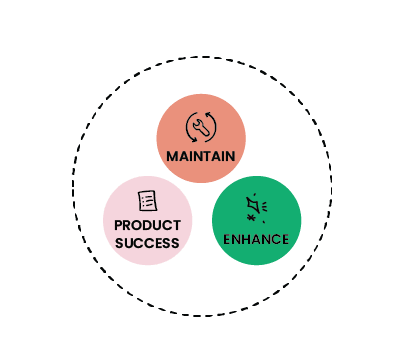
There are actually several parallel focuses during support – beyond just the maintenance of an application. This is why we broadened the
support phase to include Enhance and Product Success. All three phases are critical during support and help an application move closer
towards product/market fit.






.png)